Biophilic design is often described as a return to nature. But what does that actually mean? And how does it change how we live?
The term “biophilia” was first used by German psychologist Erich Fromm, but it’s most associated with the work of biologist Edward O. Wilson. In the 1980s, Wilson proposed that humans have an innate, evolutionary desire to connect with nature. He called this instinct biophilia – literally, a love of life.
Wilson’s theory found traction far beyond biology. It has since influenced thinking in psychology, sociology, architecture, design and even urban planning. It’s not hard to see why. In an era of urbanisation, digitisation and near-constant stimulation, the idea of returning to something elemental is more appealing than ever.
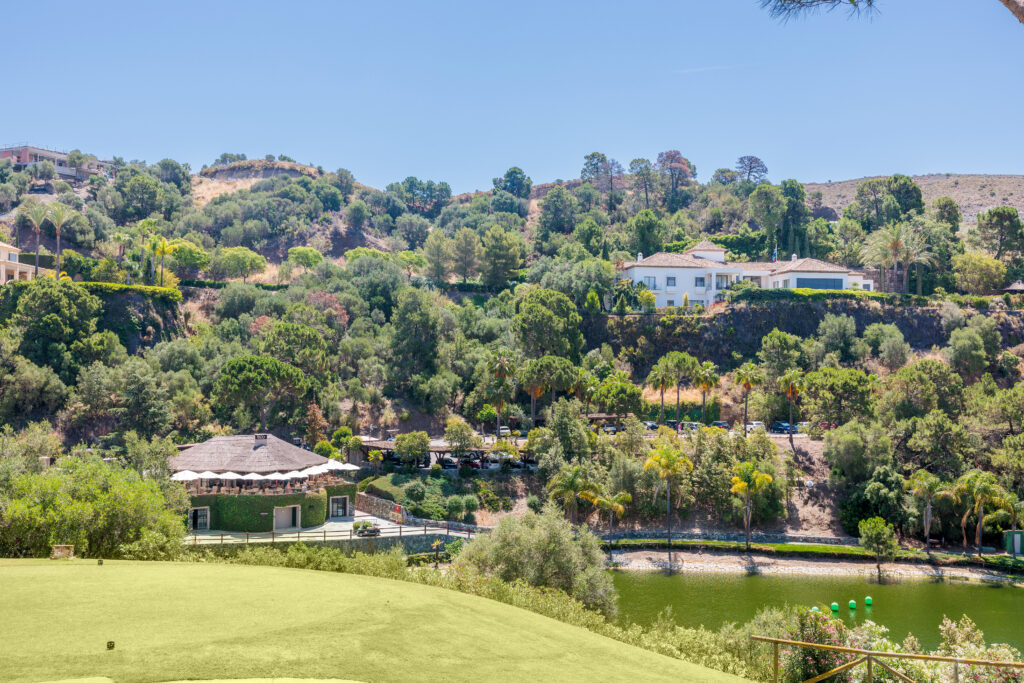
Nature as refuge, house as sanctuary
Modern life often keeps us at a distance from the natural world. The average person in a city spends 90% of their time indoors – frequently surrounded by noise, artificial light, and polluted air. Biophilic design offers an alternative.
It does so by bringing natural elements – air, light, texture, shape – into our living spaces in practical, measurable ways. At the heart of this idea is a simple goal: to create places where we can recover. Places that support mental balance and physical health.
Homes are especially important. We can’t always control the environment at work, in transport, or on the high street. But we can shape the places we return to at the end of the day. A home rooted in biophilic principles can offer calm, reduce stress, support sleep, and even improve cognitive function.
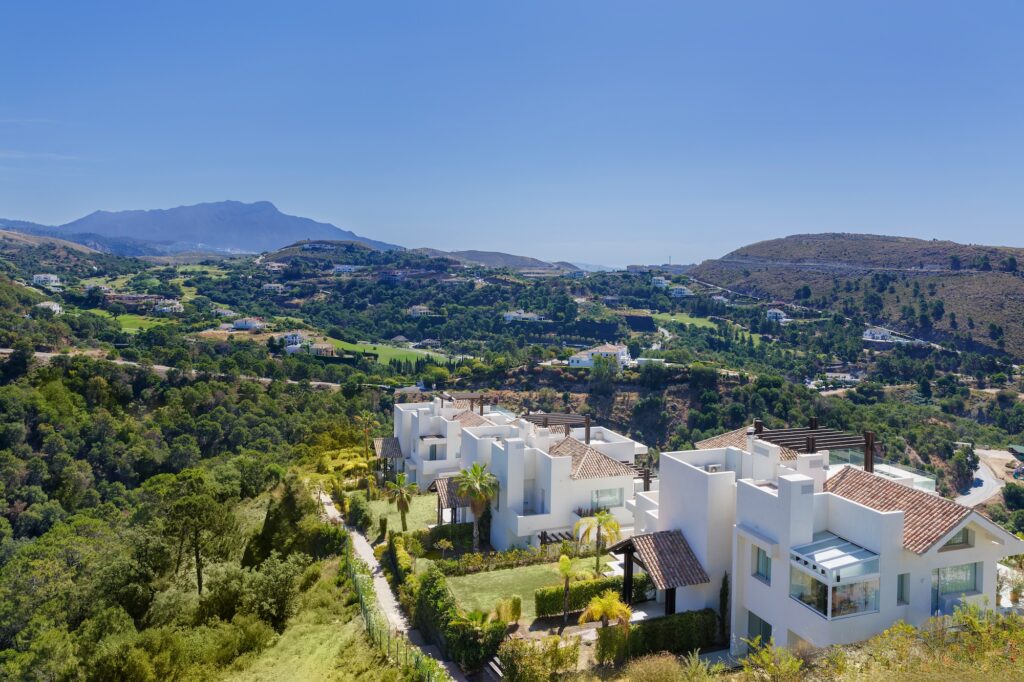
Bringing nature closer to home
Our latest development was founded on this thinking. From the outset, we aimed to design homes that enabled a continuous connection with the natural world. That meant more than just adding some greenery. It meant choosing a site that was already rich in biodiversity and committing to preserving as much of it as possible.
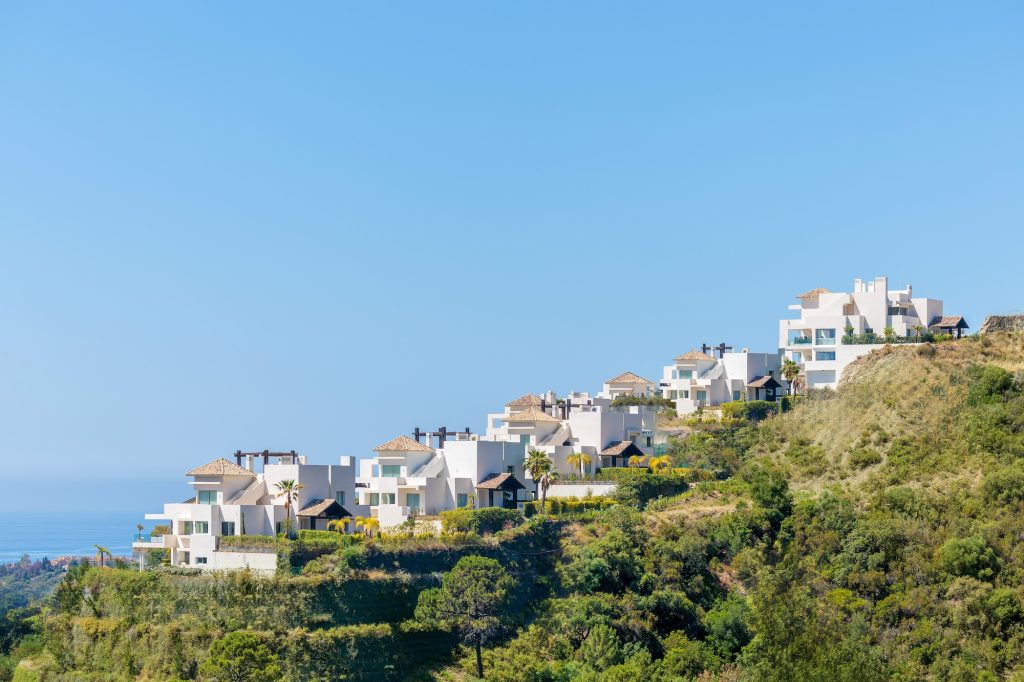
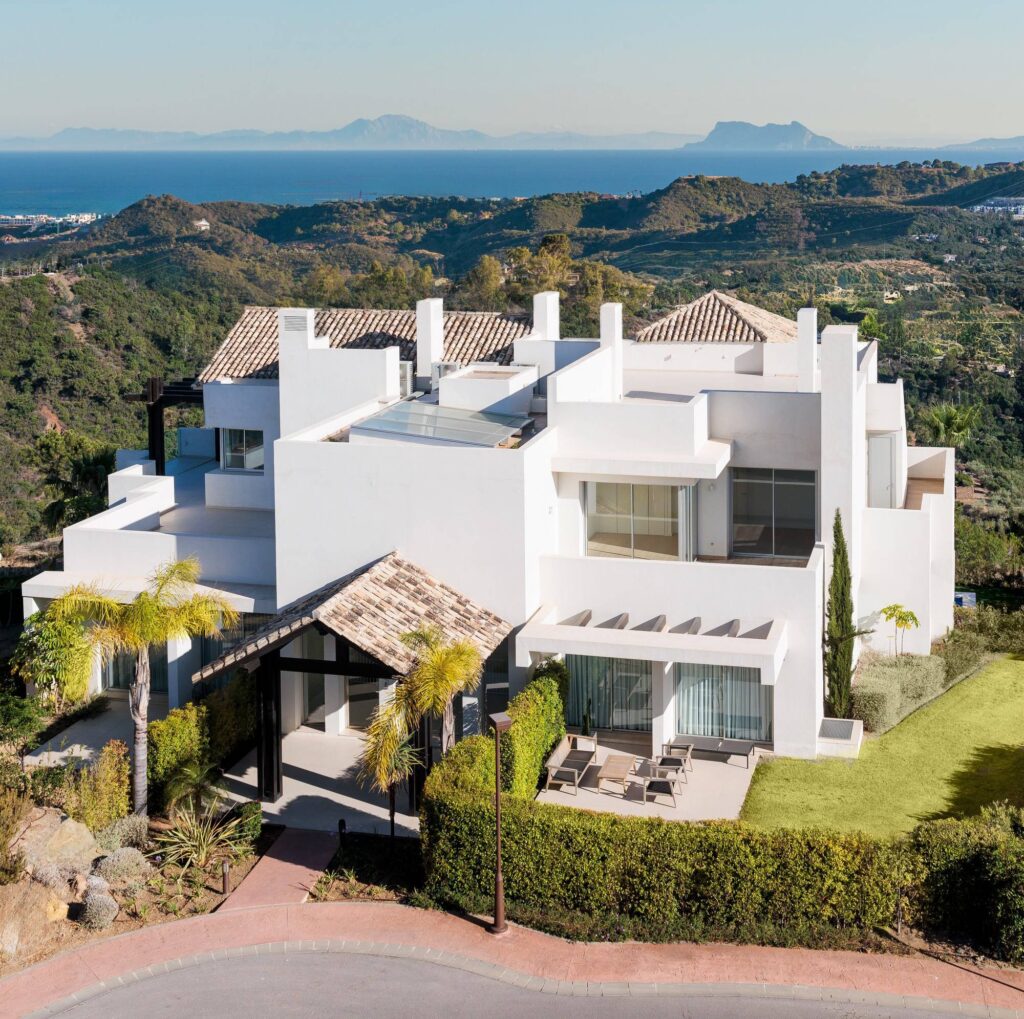
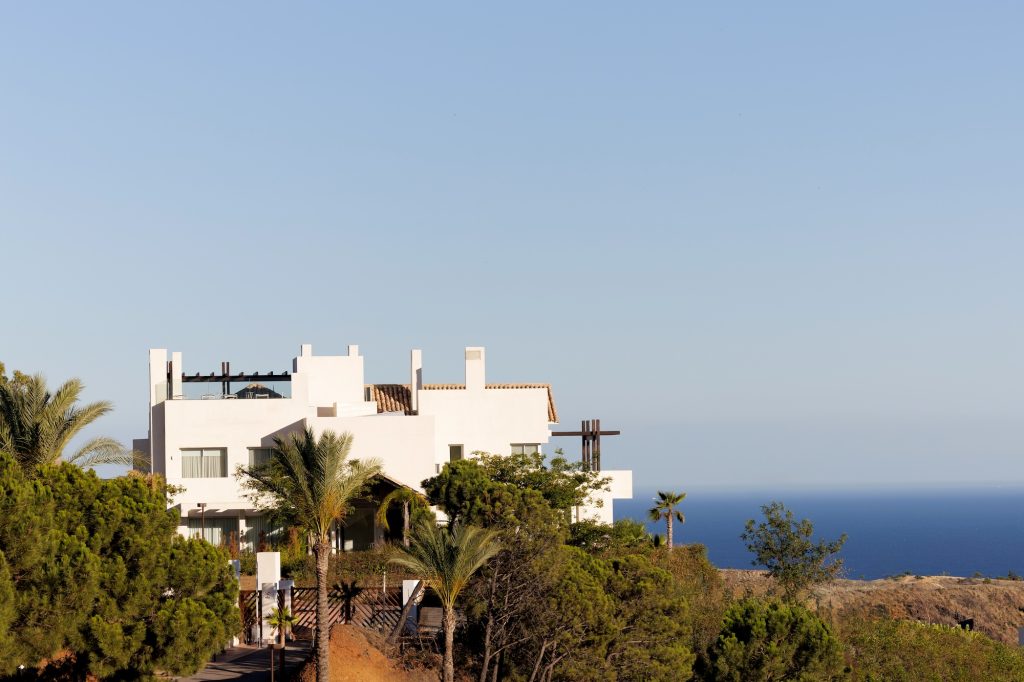
Only 5% of our 158,000m² plot was used for building. The rest has been left as green valleys, forested hills and landscaped parkland. Every apartment faces panoramic views of the sea, Gibraltar, and North Africa. Each has direct visual access to nature – and physical access too.
Six principles of biophilic design
Biophilic design is not a single aesthetic. It’s a set of design principles rooted in research and practical outcomes. Here are the six that shaped our project.
1. Prioritise contact with nature
Visual connection is key. Homes should be oriented around views of trees, water, sky, or green space. Panoramic glazing, large windows and glass doors are useful tools, but the real question is: what’s visible through them?
Where daylight is limited, dynamic lighting systems that mirror natural patterns can help. These features support circadian rhythms, boost mood, and reduce stress.
2. Use patterns and textures inspired by nature
Natural materials like stone and wood are foundational. But pattern and texture matter just as much. Think organic motifs, soft edges, and tactile surfaces that mimic the feel of leaves, bark, or sand. These sensory cues bring us closer to how we feel outdoors.
3. Choose sustainable materials
The most effective biophilic spaces are built to last – and built responsibly. Wood is our preferred material, and we use it for beams and roof structures. Adding it ensures design integrity without compromising environmental goals.
4. Embed plant life into the design
This principle is perhaps the most visible. Plants now play a central role in many contemporary interiors. Living walls, roof gardens, and internal planters offer more than aesthetics. They help purify air, lower ambient temperatures, and promote well-being.
In biophilic design, greenery isn’t an add-on. It’s part of the structure.
5. Design for human comfort and well-being
Privacy, safety, and a sense of retreat are fundamental to wellbeing. Biophilic interiors offer these through enclosed nooks, quiet zones, and layered soundscapes. The aim is to recreate the sense of shelter we might feel under a tree canopy or beside a stream.
6. Reflect nature through colour and form
Earth tones, greens, soft blues, ochres and stone shades all echo the natural world. Rounded furniture and irregular shapes can also evoke organic forms. Together, they contribute to a more calming, human-centric space.

A house should restore you
We feel better when we’re close to nature. The data shows this, and so does common sense. At its best, biophilic design creates homes that do more than shelter. They become places of restoration – a base from which we can face the world outside.
That’s why our homes are designed not just to be lived in, but to support how we live. Spaces that restore. Rooms that breathe. A sanctuary built for renewal.
Marbella Club Hills is located within the prestigious Marbella Club Golf Resort, and it showcases the market's versatility, from elegant penthouses with sweeping course views to spacious villas designed for family living.
- Phase 1: Already completed and delivered
- Phase 2: Currently under construction:
- penthouses (3-4 bedroom),
- first-floor apartments (2-3 bedrooms), and
- duplex garden apartments (3-4 bedrooms)
- Phases 3 and 4: In the pipeline:
- 4 standalone villas (5 bedrooms), and
- 6 semi-detached villas (5 bedrooms).
Find out more about the real estate market on the coast in our previous publications:
- Market Insights: Understanding the golf property investment advantage
- Market Insights: "Marbella Property Market 2024" report by Panorama – Key takeaways
- Market Insights:Off-plan as an investment strategy at Marbella Club Hills