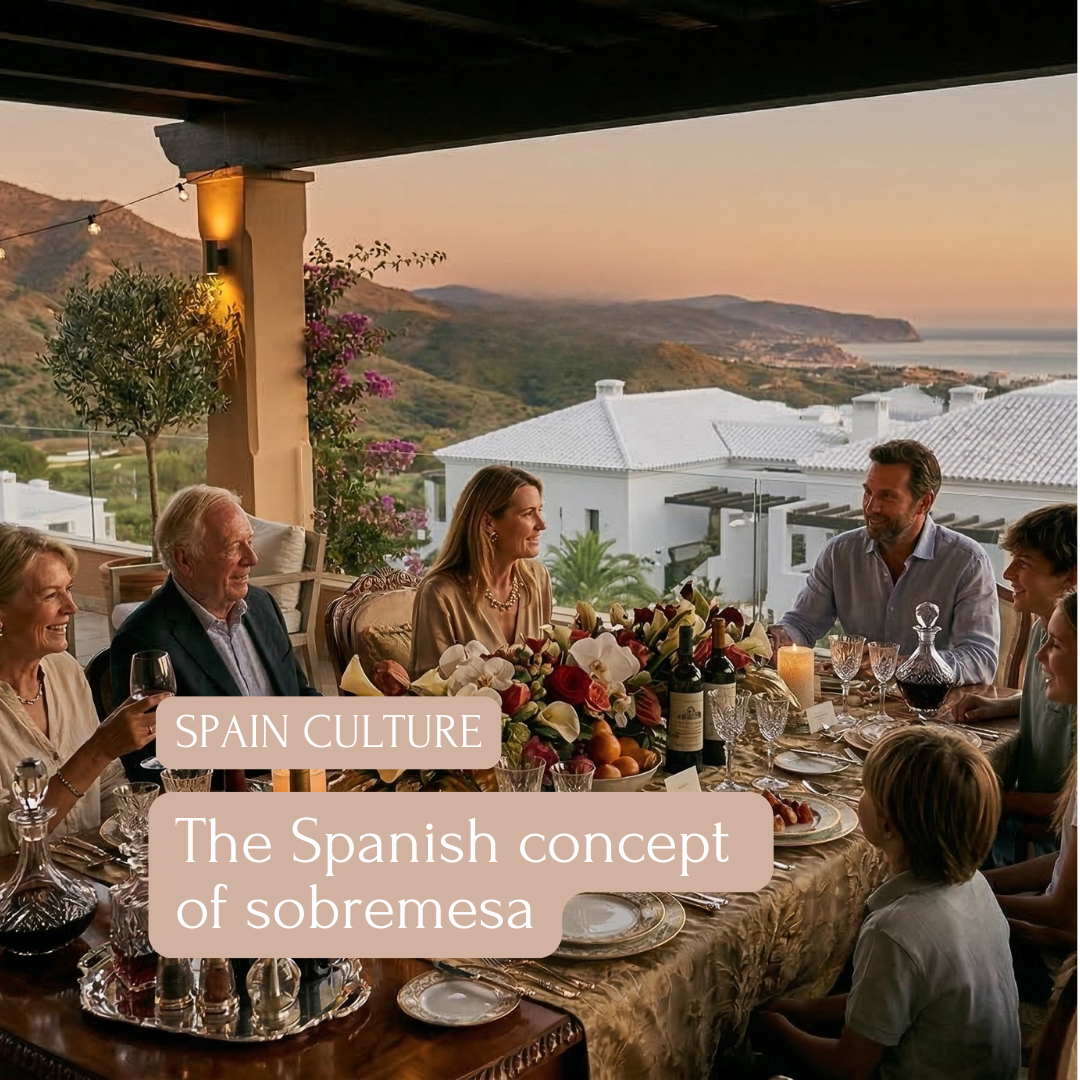


There is a word in Spanish that has no direct translation in English: Sobremesa.
Literally, it means “over the table". In practice, it describes the unhurried time spent lingering after a meal. Talking, reflecting, laughing, sometimes debating, long after the plates have been cleared.
In Spain, meals do not end when the food is finished. They dissolve gently into conversation. And within that simple cultural habit lies something deeper: a different relationship with time.
It may not be a coincidence that Spain consistently ranks among the world’s longest-living societies. Shared meals, outdoor living, and extended social interaction remain deeply embedded in daily life.
The luxury of lingering
In much of Northern Europe, meals are efficient. Schedules are structured. Even leisure can feel organised. In Spain, particularly in Andalusia, time stretches differently.
Lunch extends into the afternoon conversation. Dinner unfolds as the sky deepens from amber to indigo. Children drift between table and terrace. There is no urgency to leave the table and no pressure to “move on.” This is sobremesa, and it is as embedded in Spanish life as olive oil or whitewashed walls.
For many international residents, it is this subtle shift that feels most transformative.
Architecture that encourages connection
Sobremesa is not only cultural but architectural as well. Spanish homes are designed for gathering.
- Large terraces facing the horizon
- Courtyards that shelter from wind while welcoming light
- Kitchens that open naturally into living areas
- Long tables that invite extended conversation
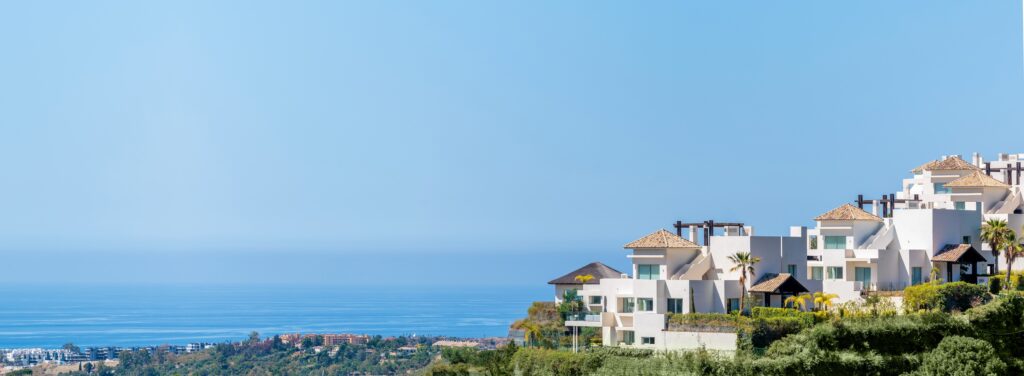
The climate supports it because with over 300 days of sunshine on the Costa del Sol, outdoor living is habitual. Even in winter, afternoons remain temperate enough for al fresco dining.
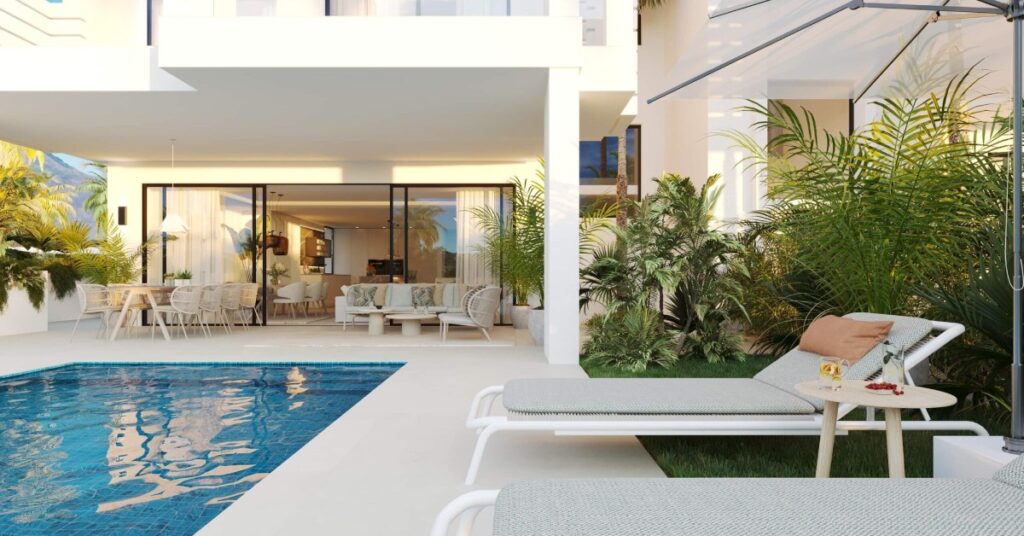
Architecture here connects instead of isolates. It blurs the boundary between interior and exterior, between formal and informal space. The terrace becomes the true living room.
A different rhythm of family life
For families relocating from Belgium, the Netherlands, Scandinavia or Germany, sobremesa often becomes an unexpected gift. Children adapt quickly to outdoor living. Evenings are not confined indoors. Weekends revolve around shared meals rather than scheduled activities.
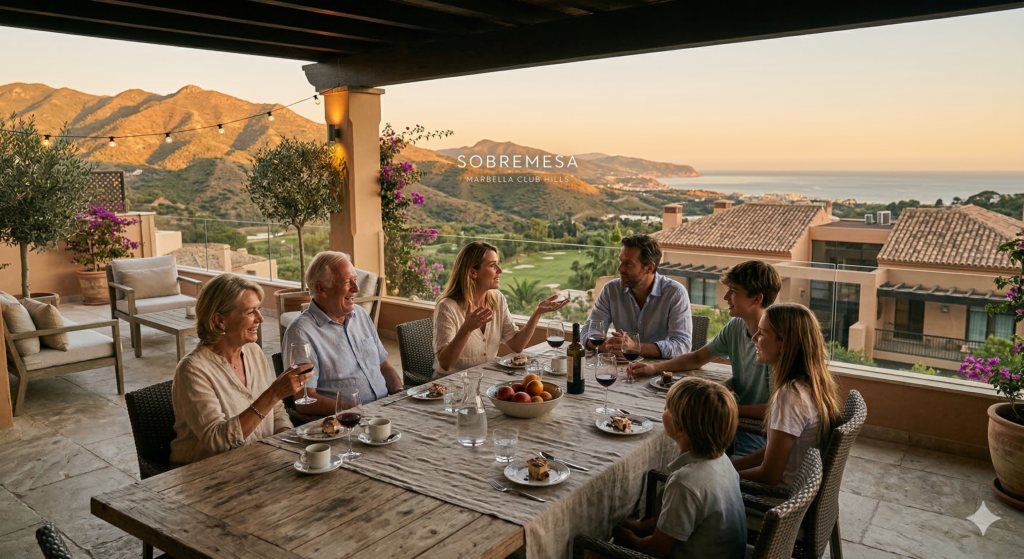
In Spain, it is common to see three generations at one table, not for a special occasion, but for an ordinary Sunday. This intergenerational rhythm creates something rare: continuity.
For active retirees and grandparents, it offers the opportunity to host children and grandchildren in a setting designed for togetherness. For younger families, it restores something that modern life often fragments. Time without distraction.
On weekends, sobremesa can extend well beyond the meal itself. In many Spanish households, Sunday lunches evolve into three or four hours of relaxed conversation, coffee, and sometimes a glass of brandy or herbal liqueur.
The psychology of slower evenings
There is science behind this cultural habit. Extended shared meals are linked to:
- Lower stress levels
- Stronger family bonds
- Improved emotional wellbeing
- Better digestion and metabolic balance
Conversation stimulates cognitive engagement. Laughter reduces cortisol. Being outdoors enhances serotonin production. In climates where evenings remain mild and terraces overlook open landscape, the nervous system softens.
Space as a social philosophy
What makes Andalusia distinctive is how lifestyle and setting reinforce one another.
Mountain elevations offer quiet privacy. The Mediterranean provides an open horizon. Golf clubs and equestrian centres become natural meeting points. Clubhouses extend the home environment rather than replace it.
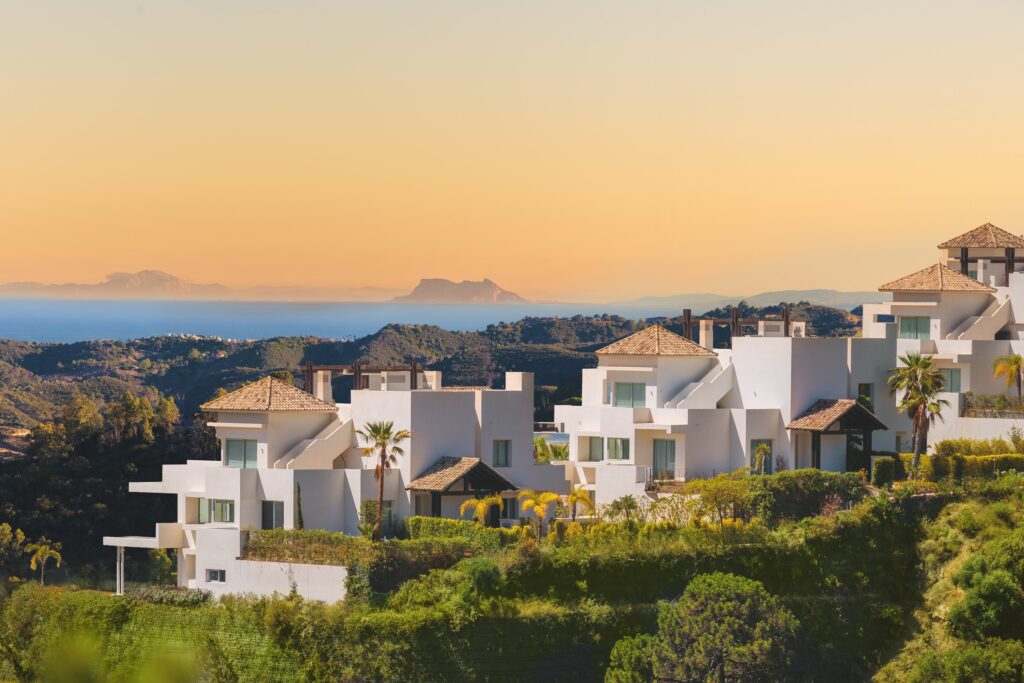
In thoughtfully planned hillside communities, architecture is intentionally low-density, where land is preserved, views are protected, and roads remain discreet.
This spatial generosity allows life to unfold without compression. When only a small portion of the land is built upon, what remains is silence and space for conversation.
Why it feels different here
Many Northern European buyers initially come for the climate. They stay for the rhythm. There is something profoundly reassuring about evenings that unfold slowly. About neighbours who greet one another without haste. About dinners that extend without checking the time. The Costa del Sol, particularly its elevated mountain enclaves, offers proximity to Marbella’s energy, yet enough distance to return home to calm.
Above the coastline, the air cools gently after sunset. Light lingers longer. The horizon expands. It is in these moments with a glass in hand, family gathered, the Mediterranean stretching quietly below that the meaning of sobremesa becomes clear. Luxury here is temporal, not material.
It is the freedom to remain at the table long after the meal has ended.
Marbella Club Hills is located within the prestigious Marbella Club Golf Resort, and it showcases the market's versatility, from elegant penthouses with sweeping course views to spacious villas designed for family living.
- Phase 1: Already completed and delivered
- Phase 2: Currently under construction:
- penthouses (3-4 bedroom),
- first-floor apartments (2-3 bedrooms), and
- duplex garden apartments (3-4 bedrooms)
- Phases 3 and 4: In the pipeline:
- 4 standalone villas (5 bedrooms), and
- 6 semi-detached villas (5 bedrooms).
Find out more about the real estate market on the coast in our previous publications:
- Market Insights: Marbella 2.0: Why the next wave of business migration is already here
- Market Insights: Understanding the golf property investment advantage
- Market Insights: Marbella international schools attract relocating families
- Market Insights:Off-plan as an investment strategy at Marbella Club Hills