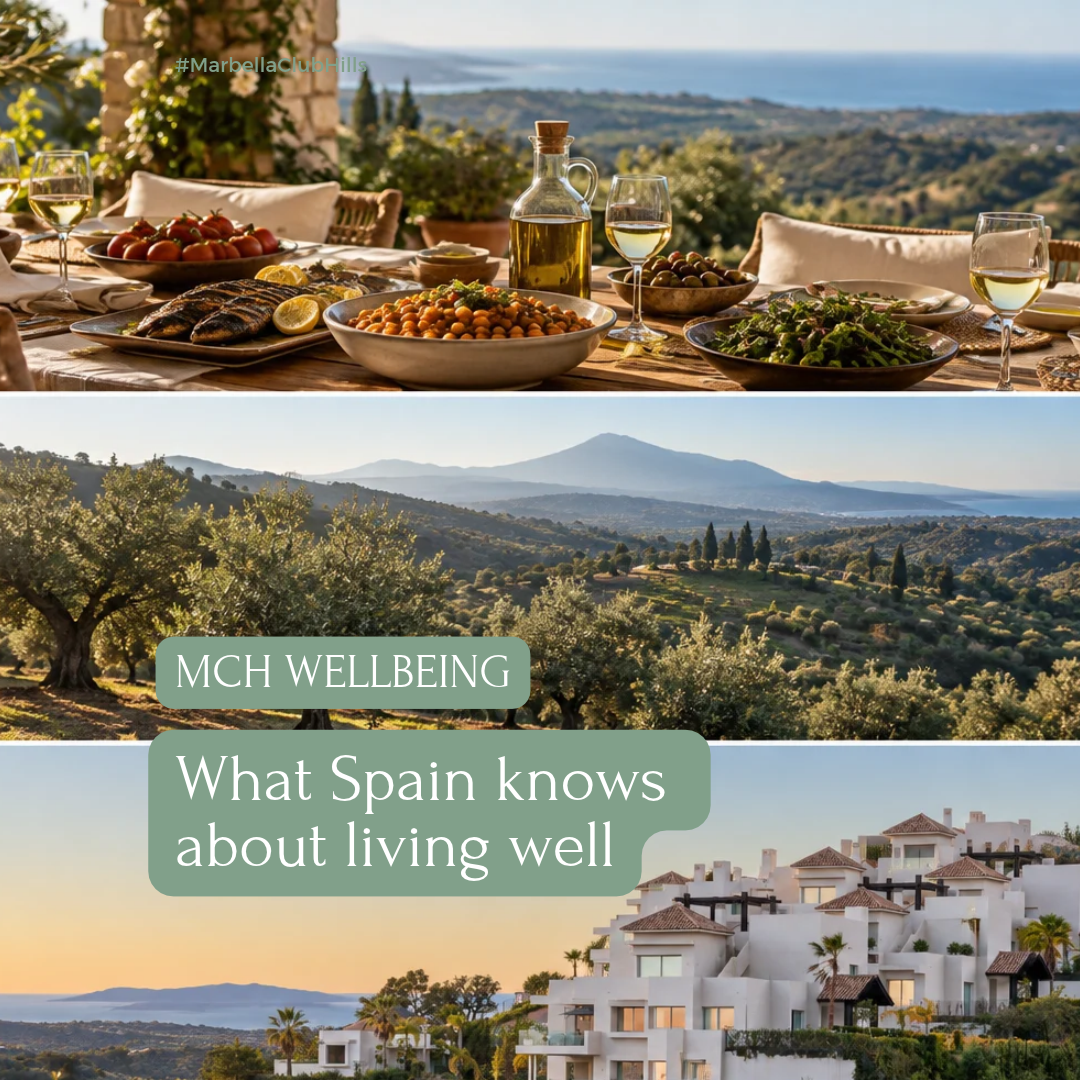


Spain has the highest life expectancy in the European Union. According to Eurostat, a person born in Spain in 2024 could expect to live to 84, ahead of Sweden and Italy, and Spanish women now live longer than women anywhere else in the EU. Spain's national statistics office puts the figure at 84.01 years, the highest it has ever recorded.
Figures like these rarely come down to a single cause. They reflect how people eat, rest, move and spend time together, and the healthcare system that supports them. For anyone considering a home on the Costa del Sol, they also describe the daily rhythm they would be joining.
The Mediterranean table
Olive oil, vegetables, pulses, fish, nuts and fruit form the base of the Spanish diet. The PREDIMED trial, one of the largest nutrition studies carried out in Spain, found that a Mediterranean diet supplemented with extra virgin olive oil or nuts reduced major cardiovascular events by around 30% compared with a reduced-fat diet.
Spain is the world's largest olive oil producer, and Andalusia grows most of it. Even in a season disrupted by winter storms, the 2025/26 harvest reached around 1.3 million tonnes. Drive inland from Marbella and the groves begin within half an hour, running in ordered lines across the hills towards Ronda and Antequera. [Internal link: our previous article on the health benefits of olive oil]
Wine, cheese and cured ham have their place at the table too. Researchers point to the overall pattern rather than any single food: meals eaten at regular hours, at a measured pace, and usually in company.
The midday pause
The full siesta is less common in Spanish cities than its reputation suggests. What remains is a long lunch and a later rhythm to the day. In Andalusia, the summer afternoon still slows noticeably. Village shops close between two and five, and the evening begins around eight.
Research on short daytime rest links it to lower stress and better alertness later in the day. The value lies less in the nap itself than in a working day that allows for a genuine break.
Time with others
Spanish life is organised around family and friends. Sunday lunch can run well into the afternoon, and grandparents are often part of the weekly routine. Long-term studies consistently associate strong social ties with longer life and better mental health.
That sense of community shows up in unexpected places. Spain has led the world in organ donation for 34 consecutive years, with around 52 deceased donors per million people in 2025, ahead of the United States and every other country reporting to the Global Observatory on Donation and Transplantation.
Movement as part of the day
Much of the activity in Spain is unstructured. People walk to the market, take the evening paseo along the seafront, and spend weekends in the hills. Spain's adult obesity rate stood at 14.9% in Eurostat's 2025 figures, below the EU average of 16.3%.
The climate helps. On the Costa del Sol, outdoor exercise is possible for most of the year, and a morning walk or round of golf in January is ordinary rather than exceptional.
Healthcare built around prevention
Spain's universal public health system is organised around local primary care centres, with an emphasis on early detection and preventive care. Several regional health services also run programmes through which family doctors can refer patients to supervised physical activity, treating exercise as part of treatment.
Alongside the public system, the Costa del Sol has a well-established private sector with multilingual staff. Hospital Costa del Sol, the main public hospital for the area, is in Marbella, and private options include Quirónsalud Marbella and HC Marbella International Hospital.
Living well at Marbella Club Hills
Marbella Club Hills sits in the hills of Benahavís, above the coast. Only 10% of the 158,000 m² site is built on. The rest remains natural landscape and resort grounds, crossed by walking paths and open to the mountain air.
Residents hold membership of the Marbella Club Golf Resort and have access to the Equestrian Centre. Mornings can begin with a round on the course below the terraces or a ride along the valley trails. Marbella, Puerto Banús and the beaches are within 20 minutes, and the restaurants of Benahavís village are closer still.
By evening, the light shifts across the Strait of Gibraltar towards the Moroccan coast. Dinner is late, unhurried and shared. Spain's health figures are the sum of habits like these, and here they come easily.
About Marbella Club Hills
Marbella Club Hills is a gated residential development in the hills of Benahavís, set within the Marbella Club Golf Resort. The estate covers 158,000 m², of which 10% is built on, and will comprise 120 residences across four phases. Residents have priority access to the Marbella Club Golf course and the Equestrian Centre. They share the North Club's heated pool, gym and spa.
Phase I is complete and sold out. Phase II, 30 apartments and penthouses with two to four bedrooms across six blocks, is now under construction. Current stage, e.g. structure complete on Blocks 3, 15 and 16, with first deliveries scheduled for Q4 2027. Prices start from €840,000.
To arrange a site visit or request floor plans, visit marbellaclubhills.com.
- Life expectancy: INE, Indicadores Demográficos Básicos 2024 (84.01 years); Eurostat regional and national life expectancy release, March 2026
- Mediterranean diet: PREDIMED trial, New England Journal of Medicine (2018 republication)
- Olive oil: Spanish Ministry of Agriculture final 2025/26 figures, reported by Olive Oil Times
- Organ donation: ONT annual balance, January 2026; Global Observatory on Donation and Transplantation, August 2026
- Obesity: Eurostat 2025 data (self-reported BMI)§
- Read our previous blog about the health benefits of olive oil.